Save the tooth
If the tooth is infected but can be repaired, a root canal may save it. Ask first.
Free, no-obligation plan review. A coordinator replies within one working day (India time). How it works
Dental implants
What an implant is, who it may suit, how many trips it usually takes and what the indicative price does and does not include.
The short answer
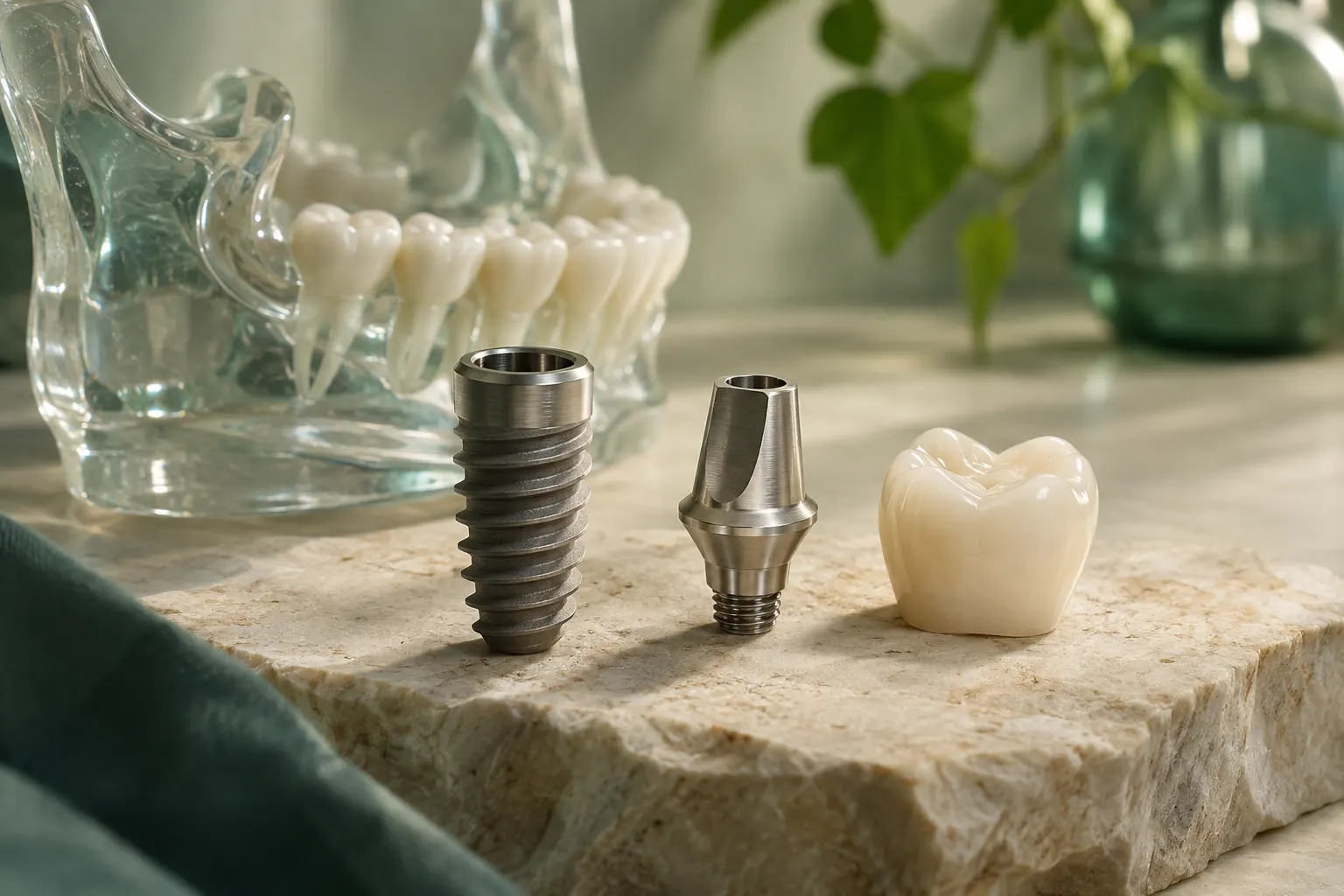
A dental implant is a small titanium screw placed in the jaw to replace the root of a missing tooth. A crown is fixed on top. Titanium is a metal that bone can grow around.
In India, clinics advertise $400–1,200 for one implant with a crown. That is an indicative range from clinic marketing in November 2026, not a quote.
The usual plan is two trips: 7–14 days to place the implant, then 3–6 months later to fit the final tooth. That timing is one clinic's estimate. Your dentist will confirm it for your case.
An implant is not always the right choice. A bridge or denture may suit you better, and sometimes the natural tooth can still be saved. Only a dentist who examines you can decide.
The treatment
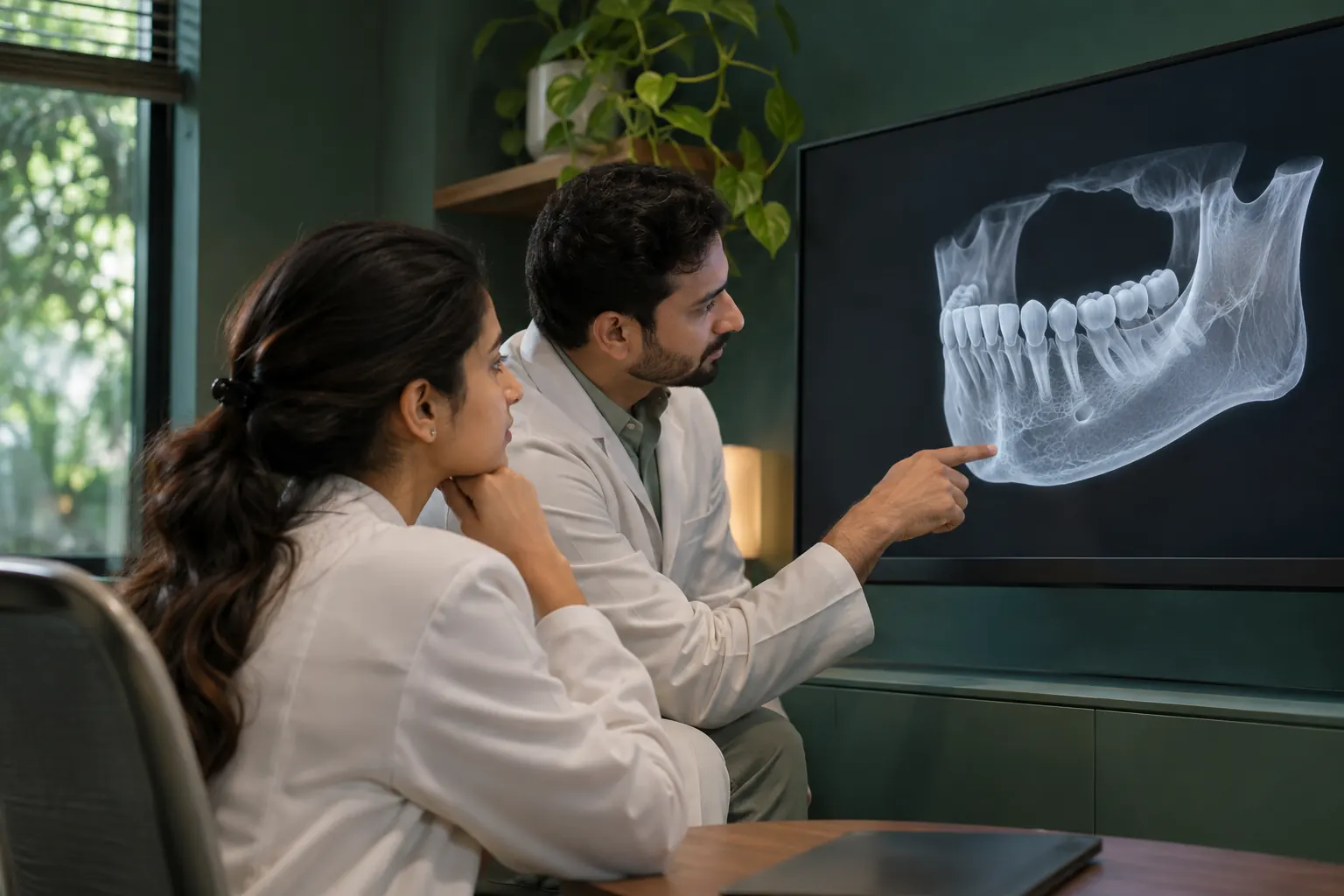
A natural tooth has a root in the jaw and a crown above the gum. An implant replaces the root. It is usually a titanium screw. Bone grows around it over a few months. This is called osseointegration.
The treatment has three parts. First, the implant is placed in the jaw. Second, an abutment is fitted. The abutment is a small connector between the implant and the tooth. Third, a crown is made to match your other teeth and fixed on top.
An implant replaces a tooth without cutting the teeth on either side. That is the main difference from a bridge. A bridge uses the neighbouring teeth for support, so those teeth usually have to be shaped.
Some people need extra bone first. A bone graft adds bone to the jaw. A sinus lift raises the floor of the sinus, which is an air space above the upper back teeth. These add time and cost. Ask whether they are in your quote.
A single implant is not a full-arch solution. If most teeth are missing in one jaw, a denture or All-on-4 may be the better conversation.
Who it suits
An implant can be a good long-term choice, but it is surgery. The lists below are a starting point for a conversation with a dentist, not a diagnosis.
If the tooth is infected but can be repaired, a root canal may save it. Ask first.
A bridge is faster and avoids surgery, but it usually means shaping the teeth either side.
A removable denture is simpler and cheaper. It can be less stable and needs daily care.
A gap can be left, but neighbouring teeth may drift and the jaw bone can shrink. Ask what this means for you.
Step by step
This is the common plan for a single implant. Your own schedule may differ if you need a graft or extra treatment.
See a dentist at home if you can. Ask for a copy of your X-rays or scans and a written treatment plan. Ask whether your dentist will check the work afterwards.
The clinic examines your mouth, takes scans and confirms whether an implant is possible. Ask for the final itemised quote before surgery.
The implant is placed under local anaesthetic. Local anaesthetic numbs the area; you stay awake. A review follows, and a temporary tooth may be fitted if the plan allows.
The clinic checks the site, shows you how to clean it and gives you written aftercare. This 7–14 day window is one clinic's estimate, not a rule.
Bone grows around the implant. Keep the area clean and avoid smoking. If you have pain, swelling or a loose cover, contact the clinic.
The abutment and crown are fitted, the bite is checked and a records pack is prepared for your dentist at home. The 3–6 month gap is one clinic's estimate. Ask the clinic how many days the second trip needs.
Healing, grafting and the clinic's lab can change these days. Ask for your own written schedule, including what happens if you cannot stay as long as planned. Do not book a return flight that leaves no room for a review.
Indicative costs, November 2026
The bar compares clinic-marketing ranges for one implant with a crown. It is not a quote.
One implant with crown
Indicative ranges from clinic marketing, November 2026. Not verified, not a quote. Flights, hotels, bone graft, extra visits and time off are not included.
We do not publish a clinic's headline price as if it were your price. Aarogic asks a clinic for an itemised written quote: implant, abutment, crown, scans, temporary tooth, reviews and any graft. You compare the total, not the poster.
The written quote
A quote can look complete and still leave out the parts that cost most. Use these two lists when you read it.
If an item is not written down, treat it as not included. Ask the clinic to list every item and every possible extra charge in the plan.
Honest risks
Many implants settle and work well. Some do not. A written plan should name the risks that apply to you, not only the benefits.
The implant can loosen or fail to integrate. It may need to be removed, the bone left to heal, and a new implant placed later. That means more time and cost.
The site can become infected, or the gum around the implant can become inflamed. Good cleaning and review visits lower the risk, but they do not remove it.
In the lower jaw, a misplaced implant can affect a nerve and cause numbness. In the upper jaw, it can affect the sinus. A scan and an experienced dentist lower this risk.
A crown is not invincible. It can chip, loosen or need replacing. Ask what the warranty covers and what a replacement costs.
Smoking, uncontrolled diabetes and some medicines slow healing. Your dentist may advise a graft, a delay or a different treatment. Only they can assess your case.
If something fails after you fly home, a local dentist may not want to take over another dentist's work. Ask yours before you travel, and get the records pack.
Before you agree
Ask these before you pay a deposit. Write the answers down, or ask for them in the plan.
A clinic that cannot answer these questions in writing is telling you something useful. Slow down, or ask another dentist.

Checking the dentist
Anyone can rent a room and call it a clinic. The person who cuts into your jaw matters more than the reception area.
Each Indian state has its own dental council. The Dental Council of India keeps the Indian Dentist Register at dciindia.gov.in. Registration shows a licence, not skill. Ask how many implants the dentist places and who handles complications. Before listing a clinic, we check the treating dentist's registration and ask for itemised quotes, warranty terms and a written aftercare plan. We do not publish reviews we cannot verify.
Questions, answered
The answers below repeat the important parts on purpose. If your case is different, ask a dentist who has examined you.
Free plan review
Tell us what tooth is missing and where you are based. A coordinator replies within one working day, India time, and explains what to ask the clinic. No obligation.